CATEGORY: MOVIES
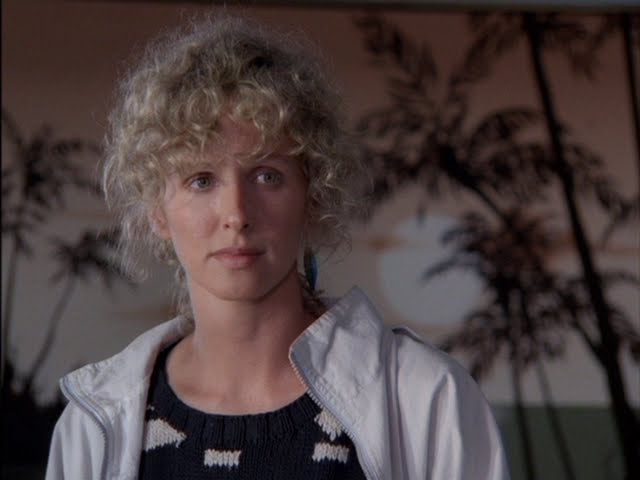
There is a passage in City of God which applies to Dollarhyde insofar as he represents the 'presence' of Satan. It explains how it is that the killer can have a 'good side' to him, a side which is in part shown to consist of sensitiveness, as depicted when he is on the verge of crying while in bed with Reba (as shown at left). From City of God, Book 19, chapter 13:
[There is] a nature in which evil does not or even cannot exist; but there cannot be a nature in which there is no good. Hence not even the nature of the devil himself is evil, in so far as it is nature, but it was made evil by being perverted...The good imparted by God to his nature did not screen him from the justice of God by which order was preserved in his punishment; neither did God punish the good which He had created, but the evil which the devil had committed.
God did not take back all he had imparted to his nature, but something He took and something He left, that there might remain enough to be sensible of the loss of what was taken. And this very sensibility to pain is evidence of the good which has been taken away and the good which has been left. For, were nothing good left, there could be no pain on account of the good which had been lost.
City of God (Dods)
Thursday, December 10, 2009
Monday, December 7, 2009
Manhunter analysis - part 52: References to the number '3' in the movie
CATEGORY: MOVIES
In part 51 it was mentioned that the biblical prophet, Jonah, spent three days and nights inside the body of a large fish, before God caused the fish to vomit him out. It turns out that the number three comes up in quite a few places in Manhunter. Below is a list of each place that 'three' is said by the characters:
1) Graham records that there are three blood stains on the east wall of the Leeds house.
2) Graham caught Dr. Lecktor three years ago (mentioned in the Atlanta police meeting).
3) Lecktor first recognizes Graham by the aftershave he wore in court three years ago.
4) Eileen tells Dollarhyde that there is a variation in the gamma in "number 3."
5) Chilton says that he can keep Lecktor in the holding cell for three or four hours before he gets suspicious.
6) There are three "t's" in "Tattler" (spoken by Crawford).
7) Beverly Katz sent "three blue grains" to Brian (to be analyzed by him).
8) They tried sodium amytal on Lecktor three years ago... (mentioned in the investigators' meeting).
9) In the darkroom, Reba tells Dollarhyde to come forward three steps.
10) Crawford wants a chopper on the roof of the building he's in within three minutes.
11) Dollarhyde lives off of route 3, in Chesterfield, Missouri.
12) In the scene in Dollarhyde's back yard, it is stated that the backup is "three minutes away."
All these three's allude to the fact that Jonah spent three days inside the fish, which, as we will see later, is related to the three days between Jesus' death and subsequent resurrection.
In part 51 it was mentioned that the biblical prophet, Jonah, spent three days and nights inside the body of a large fish, before God caused the fish to vomit him out. It turns out that the number three comes up in quite a few places in Manhunter. Below is a list of each place that 'three' is said by the characters:
1) Graham records that there are three blood stains on the east wall of the Leeds house.
2) Graham caught Dr. Lecktor three years ago (mentioned in the Atlanta police meeting).
3) Lecktor first recognizes Graham by the aftershave he wore in court three years ago.
4) Eileen tells Dollarhyde that there is a variation in the gamma in "number 3."
5) Chilton says that he can keep Lecktor in the holding cell for three or four hours before he gets suspicious.
6) There are three "t's" in "Tattler" (spoken by Crawford).
7) Beverly Katz sent "three blue grains" to Brian (to be analyzed by him).
8) They tried sodium amytal on Lecktor three years ago... (mentioned in the investigators' meeting).
9) In the darkroom, Reba tells Dollarhyde to come forward three steps.
10) Crawford wants a chopper on the roof of the building he's in within three minutes.
11) Dollarhyde lives off of route 3, in Chesterfield, Missouri.
12) In the scene in Dollarhyde's back yard, it is stated that the backup is "three minutes away."
All these three's allude to the fact that Jonah spent three days inside the fish, which, as we will see later, is related to the three days between Jesus' death and subsequent resurrection.
Manhunter analysis - part 51: Jonah and Nineveh
CATEGORY: MOVIES

Russian Orthodox icon of Jonah, 16th century (Iconostasis of Kizhi monastery, Karelia, Russia). [Image from the Wikipedia 'Jonah' page, public domain, via Wikimedia Commons.]
One of Lecktor's 'book code' verses is Jonah 6:8. Although the biblical book of Jonah has no chapter 6 in it, certain contents from this book do apply to the movie we are analyzing.
Beginning at Jonah 1:1-2,
Now the word of the Lord came to Jonah son of Amittai, saying, "Go at once to Nineveh, that great city, and cry out against it; for their wickedness has come up before me."
Jonah responds by attempting to flee from "the presence of the Lord" [Jon. 1:3] by going to Jaffa and sailing to Tarshish. A huge storm arises and the sailors, realizing this is no ordinary storm, cast lots and learn that Jonah is to blame. Jonah admits this and states that if he is thrown overboard the storm will cease. The sailors try to get the ship to the shore but in failing feel forced to throw him overboard, at which point the sea calms. Jonah is miraculously saved by being swallowed by a large fish specially prepared by God where he spent three days and three nights (Jon. 1:17). While in the great fish, Jonah prays to God in his affliction and commits to thanksgiving and to paying what he has vowed. God commands the fish to vomit Jonah out.
God again orders Jonah to visit Nineveh and to prophecy to its inhabitants. This time he goes and enters the city crying, "In forty days Nineveh shall be overthrown." [Jon. 3:4] The people of Nineveh believe his word and proclaim a fast. The king of Nineveh puts on sackcloth and sits in ashes, making a proclamation to decree fasting, sackcloth, prayer, and repentance. God sees their works and spares the city at that time.[a]
As described in part 45 of the analysis, there are several references to water in the movie. Also, there are at least a couple of references to fish, such as the aquarium in the Graham home, and the song Coelocanth (by the band Shriekback) playing during the tiger scene (a coelocanth is a type of prehistoric fish). These references to fish in Manhunter are, in turn, references to Jonah being inside the great fish.
Note that the city of Nineveh comes into play regarding Jonah. In the bible, Nineveh is first mentioned in Genesis. It was built by Nimrod, a "mighty hunter" [Gen. 10:9] who was descended from Noah. Genesis 10, verses 10-12, tell us that,
The beginning of [Nimrod's] kingdom was Babel, Erech, and Accad, all of them in the land of Shinar. From that land he went into Assyria, and built Nineveh, Rehoboth-ir, Calah, and Resen...
Historically speaking, it was under Sennacherib that Nineveh became a truly magnificent city (c. 700 BC). However, Nineveh's greatness was short-lived. Around 633 BC the Assyrian empire began to show signs of weakness, and Nineveh was attacked by the Medes, who about 625 BC, joined by the Babylonians and Susianians, again attacked it. Nineveh fell in 612 BC, and was razed to the ground. Following the defeat in 612 BC, the site remained unoccupied for centuries until the Sassanian period. The city is mentioned again in the Battle of Nineveh in 627 AD, which was fought between the Eastern Roman Empire and the Sassanian Empire of Persia near the ancient city. From the Arab conquest 637 AD until modern time the city of Mosul on the opposite bank of the river Tigris became the successor of ancient Nineveh.[b]
A few of the things discussed here are covered in City of God 16.3, "Of the generations of the three sons of Noah." This is followed by 16.4, which is titled, "Of the diversity of languages, and the founding of Babylon" - a topic that we've already covered.
a. Wikipedia, 'Jonah'. Web, n.d. URL = https://en.wikipedia.org/wiki/Jonah.
b. Wikipedia, 'Ninevah'. Web, n.d. URL = https://en.wikipedia.org/wiki/Ninevah.
City of God (Dods)

Russian Orthodox icon of Jonah, 16th century (Iconostasis of Kizhi monastery, Karelia, Russia). [Image from the Wikipedia 'Jonah' page, public domain, via Wikimedia Commons.]
One of Lecktor's 'book code' verses is Jonah 6:8. Although the biblical book of Jonah has no chapter 6 in it, certain contents from this book do apply to the movie we are analyzing.
Beginning at Jonah 1:1-2,
Now the word of the Lord came to Jonah son of Amittai, saying, "Go at once to Nineveh, that great city, and cry out against it; for their wickedness has come up before me."
Jonah responds by attempting to flee from "the presence of the Lord" [Jon. 1:3] by going to Jaffa and sailing to Tarshish. A huge storm arises and the sailors, realizing this is no ordinary storm, cast lots and learn that Jonah is to blame. Jonah admits this and states that if he is thrown overboard the storm will cease. The sailors try to get the ship to the shore but in failing feel forced to throw him overboard, at which point the sea calms. Jonah is miraculously saved by being swallowed by a large fish specially prepared by God where he spent three days and three nights (Jon. 1:17). While in the great fish, Jonah prays to God in his affliction and commits to thanksgiving and to paying what he has vowed. God commands the fish to vomit Jonah out.
God again orders Jonah to visit Nineveh and to prophecy to its inhabitants. This time he goes and enters the city crying, "In forty days Nineveh shall be overthrown." [Jon. 3:4] The people of Nineveh believe his word and proclaim a fast. The king of Nineveh puts on sackcloth and sits in ashes, making a proclamation to decree fasting, sackcloth, prayer, and repentance. God sees their works and spares the city at that time.[a]
As described in part 45 of the analysis, there are several references to water in the movie. Also, there are at least a couple of references to fish, such as the aquarium in the Graham home, and the song Coelocanth (by the band Shriekback) playing during the tiger scene (a coelocanth is a type of prehistoric fish). These references to fish in Manhunter are, in turn, references to Jonah being inside the great fish.
Note that the city of Nineveh comes into play regarding Jonah. In the bible, Nineveh is first mentioned in Genesis. It was built by Nimrod, a "mighty hunter" [Gen. 10:9] who was descended from Noah. Genesis 10, verses 10-12, tell us that,
The beginning of [Nimrod's] kingdom was Babel, Erech, and Accad, all of them in the land of Shinar. From that land he went into Assyria, and built Nineveh, Rehoboth-ir, Calah, and Resen...
Historically speaking, it was under Sennacherib that Nineveh became a truly magnificent city (c. 700 BC). However, Nineveh's greatness was short-lived. Around 633 BC the Assyrian empire began to show signs of weakness, and Nineveh was attacked by the Medes, who about 625 BC, joined by the Babylonians and Susianians, again attacked it. Nineveh fell in 612 BC, and was razed to the ground. Following the defeat in 612 BC, the site remained unoccupied for centuries until the Sassanian period. The city is mentioned again in the Battle of Nineveh in 627 AD, which was fought between the Eastern Roman Empire and the Sassanian Empire of Persia near the ancient city. From the Arab conquest 637 AD until modern time the city of Mosul on the opposite bank of the river Tigris became the successor of ancient Nineveh.[b]
A few of the things discussed here are covered in City of God 16.3, "Of the generations of the three sons of Noah." This is followed by 16.4, which is titled, "Of the diversity of languages, and the founding of Babylon" - a topic that we've already covered.
a. Wikipedia, 'Jonah'. Web, n.d. URL = https://en.wikipedia.org/wiki/Jonah.
b. Wikipedia, 'Ninevah'. Web, n.d. URL = https://en.wikipedia.org/wiki/Ninevah.
City of God (Dods)
Thursday, December 3, 2009
Manhunter analysis - part 50: More miscellaneous observations about the movie
CATEGORY: MOVIES
This post consists of a couple of miscellaneous observations on Manhunter.

Above left and right: At the end of the movie, Molly cries upon meeting up with Will on the beach in Captiva. Rather than being an indication of her being 'torn up' over all that has happened, this crying is, in reality, an indication that she is overcome with sadness, now that she is stuck with Will (since Dr. Bloom did not return to her).
In the scene in which tabloid reporter Freddy Lounds is in a wheelchair, rolling down a ramp toward the National Tattler parking garage guard station, the fact that he is on fire is meant to suggest that he represents a meteor in this scene - a metaphorical 'falling star'.
This post consists of a couple of miscellaneous observations on Manhunter.
Above left and right: At the end of the movie, Molly cries upon meeting up with Will on the beach in Captiva. Rather than being an indication of her being 'torn up' over all that has happened, this crying is, in reality, an indication that she is overcome with sadness, now that she is stuck with Will (since Dr. Bloom did not return to her).
In the scene in which tabloid reporter Freddy Lounds is in a wheelchair, rolling down a ramp toward the National Tattler parking garage guard station, the fact that he is on fire is meant to suggest that he represents a meteor in this scene - a metaphorical 'falling star'.
Manhunter analysis - part 49: Molly has committed incest with Kevin
CATEGORY: MOVIES [Hidden plot related]
Recall the meeting at the National Tattler office (shown at left) at which Graham, Crawford, and Dr. Bloom work with Freddy Lounds to come up with details for a news story, which will hopefully draw the Tooth Fairy into a trap. During the meeting, Will at one point offers the idea that the killer may have had sex with his mother. This statement has, in fact, been placed in the movie as a hint that Molly and Kevin have been having incest.
Above left and right: Consistent with the idea that Kevin and Molly have been having incest, is that about midway through the film, Kevin is in his mother's bedroom in Captiva (to notify her of noise outside the house, perhaps from an intruder), and he doesn't appear to be uncomfortable or hesitant, suggesting that he is used to being in the room.
This incest between Molly and her son is the reason Molly has been trying to hide from Will that she is Kevin's natural mom - she's worried that one day, Kevin will mention to Will (and/or someone else) that there has been sex between her and himself. The reason Molly has 'let her hair go', i.e., has stopped curling it, by the time of the dock conversation at the Graham's new location (as indicated in part 46), is because by this point, she has admitted to Will that she is Kevin's natural mom, and that they've been having sex. (As we will see later in the analysis, Will had already found out about the incest prior to the relocation of Molly and Kevin.) This, in turn, is why Will suggests that Molly should now go with Kevin to her dad's in Montana - Will wouldn't be suggesting another relocation so soon, unless there was some very important reason, i.e., keeping Kevin safe from Molly.
Recall the meeting at the National Tattler office (shown at left) at which Graham, Crawford, and Dr. Bloom work with Freddy Lounds to come up with details for a news story, which will hopefully draw the Tooth Fairy into a trap. During the meeting, Will at one point offers the idea that the killer may have had sex with his mother. This statement has, in fact, been placed in the movie as a hint that Molly and Kevin have been having incest.
Above left and right: Consistent with the idea that Kevin and Molly have been having incest, is that about midway through the film, Kevin is in his mother's bedroom in Captiva (to notify her of noise outside the house, perhaps from an intruder), and he doesn't appear to be uncomfortable or hesitant, suggesting that he is used to being in the room.
This incest between Molly and her son is the reason Molly has been trying to hide from Will that she is Kevin's natural mom - she's worried that one day, Kevin will mention to Will (and/or someone else) that there has been sex between her and himself. The reason Molly has 'let her hair go', i.e., has stopped curling it, by the time of the dock conversation at the Graham's new location (as indicated in part 46), is because by this point, she has admitted to Will that she is Kevin's natural mom, and that they've been having sex. (As we will see later in the analysis, Will had already found out about the incest prior to the relocation of Molly and Kevin.) This, in turn, is why Will suggests that Molly should now go with Kevin to her dad's in Montana - Will wouldn't be suggesting another relocation so soon, unless there was some very important reason, i.e., keeping Kevin safe from Molly.
Wednesday, December 2, 2009
Manhunter analysis - part 48: Beverly Katz is deceiving Will Graham
CATEGORY: MOVIES [Hidden plot related]
Beverly Katz looks at Brian Zeller out of the corner of her eyes, during the investigators' meeting.
Back in part 4 of the analysis, we went into some detail on the microscopic characteristics of hair, and we concluded that the woman who did the analysis of the hair found on the tissue note found in Lecktor's cell, Beverly Katz, was in error when she claimed that the hair sample must have been from the Tooth Fairy. Recall that when Graham and Crawford start walking the tissue note and hair samples (which have been flown in from Baltimore) through the various analyses, they first visit Katz, and Graham supplies her with hair samples from Lecktor's comb, hair from the guard who carried the note to Chilton, and whiskers from the electric razor the prison staff allow Lecktor to use. Katz looks at the tissue under a microscope and states that there is a half-inch long blond hair on it. Later, after all the analyses have been done, there is an investigators' meeting, and it is during this meeting that Katz confidently states her conclusion that it was the Tooth Fairy who wrote the note. Shortly after she makes this statement, Brian Zeller (the fibers man) says that nothing of any help was found on his end. Then, a call comes through about the ad Lecktor has sent to the Tattler. It is at this point that the camera focuses in on Katz, and we note that she looks at Brian out of the corner of her eyes, and he looks back at her, as if they share some 'special' knowledge.
The likelihood that Katz's error is an honest mistake is extremely low, when we consider that she is an FBI expert hair analyst, and that it is, in fact, the book the FBI itself uses (Butterworth-Heinemann, which was quoted in part 4 of the analysis) that says microscopic characteristics of hair alone, cannot be used to positively identify two different hair samples as having come from the same person. What must be the case is that Katz is involved in some sort of plot to deceive Will Graham. This will be explored further, in subsequent posts in the analysis.
Beverly Katz looks at Brian Zeller out of the corner of her eyes, during the investigators' meeting.
Back in part 4 of the analysis, we went into some detail on the microscopic characteristics of hair, and we concluded that the woman who did the analysis of the hair found on the tissue note found in Lecktor's cell, Beverly Katz, was in error when she claimed that the hair sample must have been from the Tooth Fairy. Recall that when Graham and Crawford start walking the tissue note and hair samples (which have been flown in from Baltimore) through the various analyses, they first visit Katz, and Graham supplies her with hair samples from Lecktor's comb, hair from the guard who carried the note to Chilton, and whiskers from the electric razor the prison staff allow Lecktor to use. Katz looks at the tissue under a microscope and states that there is a half-inch long blond hair on it. Later, after all the analyses have been done, there is an investigators' meeting, and it is during this meeting that Katz confidently states her conclusion that it was the Tooth Fairy who wrote the note. Shortly after she makes this statement, Brian Zeller (the fibers man) says that nothing of any help was found on his end. Then, a call comes through about the ad Lecktor has sent to the Tattler. It is at this point that the camera focuses in on Katz, and we note that she looks at Brian out of the corner of her eyes, and he looks back at her, as if they share some 'special' knowledge.
The likelihood that Katz's error is an honest mistake is extremely low, when we consider that she is an FBI expert hair analyst, and that it is, in fact, the book the FBI itself uses (Butterworth-Heinemann, which was quoted in part 4 of the analysis) that says microscopic characteristics of hair alone, cannot be used to positively identify two different hair samples as having come from the same person. What must be the case is that Katz is involved in some sort of plot to deceive Will Graham. This will be explored further, in subsequent posts in the analysis.
Manhunter analysis - part 47: The 'Ulysses' reference is a hint about incest
CATEGORY: MOVIES [Hidden plot related]
In part 46 we determined that Molly is Kevin's biological mother, and that she had been trying to hide this fact from Will. One thing we need to determine is why Molly would have engaged in such deception; there may be more going on than just that she has been cheating on Will with Dr. Bloom, and that she was once married to Bloom, i.e., it stands to reason that there might be some issue involving Kevin with regard to how she keeps her hair. In doing some more checking on the 'Molly Bloom' character from Ulysses, it is evident that some scholars consider there to be an underlying theme of incest in Joyce's novel.[a] In considering the applicability of this to Manhunter, what we need to determine is if there is any incest going on in our movie, and if so, who the participants are.
a. For example, in "The Triangle in James Joyce" in Patriarchy and Incest from Shakespeare to Joyce (University Press of Florida, 1998), author J.M. Ford states (p. 123) that "[I]t is in Ulysses (1921 [sic]) that [an] incest theme becomes significant."
In part 46 we determined that Molly is Kevin's biological mother, and that she had been trying to hide this fact from Will. One thing we need to determine is why Molly would have engaged in such deception; there may be more going on than just that she has been cheating on Will with Dr. Bloom, and that she was once married to Bloom, i.e., it stands to reason that there might be some issue involving Kevin with regard to how she keeps her hair. In doing some more checking on the 'Molly Bloom' character from Ulysses, it is evident that some scholars consider there to be an underlying theme of incest in Joyce's novel.[a] In considering the applicability of this to Manhunter, what we need to determine is if there is any incest going on in our movie, and if so, who the participants are.
a. For example, in "The Triangle in James Joyce" in Patriarchy and Incest from Shakespeare to Joyce (University Press of Florida, 1998), author J.M. Ford states (p. 123) that "[I]t is in Ulysses (1921 [sic]) that [an] incest theme becomes significant."
Saturday, November 21, 2009
Manhunter analysis - part 46: Molly is deceiving Will
CATEGORY: MOVIES [Hidden plot related]

In part 43 of the analysis, the possibility was raised that Molly is not Kevin's natural mother, the reasoning being that if her hair is naturally curly, then she cannot have a straight-haired child (Kevin has straight hair). However, note that she and Kevin have a fairly strong facial resemblance (see above screencaps). What must be the case is that Molly's hair is not naturally curly, and that she is Kevin's natural mother. The reason she's been keeping her hair curly is because she doesn't want Will to know that she is Kevin's natural mom. It is when she is around Will that her hair is more curly; during time periods that Will is away, she 'let's her hair go', i.e., she does not keep curling it. The reason there's a pin holding her hair in back when she and Kevin have first been relocated, is because she has been rushed to the new location from the Graham home in Captiva, and thus, she did not have time to re-curl all of her hair. Recall that we already determined she was hoping to see Bloom when she answered her door in Captiva; he knows that she doesn't have naturally curly hair.

Above left and right: These two screencaps from the scene in Captiva at the beginning of the movie, show that when Will is around, Molly keeps her hair quite curly (click to enlarge).
Above left and right: Later in the movie, Molly has been expecting Sidney Bloom to arrive in Captiva, and since Will has been away, she hasn't been keeping her hair curled.
Above left and right: Not much later than the above, upon being relocated from Captiva, Molly is still trying to lead Will to believe that her hair is naturally curly. However, she has only had short notice prior to the relocation, so she has only had time to re-curl the front part of her hair, which is why she has it pinned in back and tied in a makeshift ponytail.

Above left and right: Later, while conversing with Will on a dock at the new location, Molly has now let her hair go in the presence of Will. She is no longer trying to fool him - she has admitted to him that she is Kevin's natural mother. The reason this is an important admission is bound up with another fact that Molly admitted to Will at the new residence - a fact which Will already knew prior to her admission; this fact and how Will came to know it, is soon to be discussed.
In part 43 of the analysis, the possibility was raised that Molly is not Kevin's natural mother, the reasoning being that if her hair is naturally curly, then she cannot have a straight-haired child (Kevin has straight hair). However, note that she and Kevin have a fairly strong facial resemblance (see above screencaps). What must be the case is that Molly's hair is not naturally curly, and that she is Kevin's natural mother. The reason she's been keeping her hair curly is because she doesn't want Will to know that she is Kevin's natural mom. It is when she is around Will that her hair is more curly; during time periods that Will is away, she 'let's her hair go', i.e., she does not keep curling it. The reason there's a pin holding her hair in back when she and Kevin have first been relocated, is because she has been rushed to the new location from the Graham home in Captiva, and thus, she did not have time to re-curl all of her hair. Recall that we already determined she was hoping to see Bloom when she answered her door in Captiva; he knows that she doesn't have naturally curly hair.
Above left and right: These two screencaps from the scene in Captiva at the beginning of the movie, show that when Will is around, Molly keeps her hair quite curly (click to enlarge).
Above left and right: Later in the movie, Molly has been expecting Sidney Bloom to arrive in Captiva, and since Will has been away, she hasn't been keeping her hair curled.
Above left and right: Not much later than the above, upon being relocated from Captiva, Molly is still trying to lead Will to believe that her hair is naturally curly. However, she has only had short notice prior to the relocation, so she has only had time to re-curl the front part of her hair, which is why she has it pinned in back and tied in a makeshift ponytail.
Above left and right: Later, while conversing with Will on a dock at the new location, Molly has now let her hair go in the presence of Will. She is no longer trying to fool him - she has admitted to him that she is Kevin's natural mother. The reason this is an important admission is bound up with another fact that Molly admitted to Will at the new residence - a fact which Will already knew prior to her admission; this fact and how Will came to know it, is soon to be discussed.
Friday, November 20, 2009
Table of Contents to the Manhunter analysis
CATEGORY: MOVIES; WARNING: THIS ANALYSIS CONTAINS SPOILERS!!


There is a button that links to this table of contents, at the bottom of each post in the analysis. The parts of the analysis having to do with the hidden plot, are denoted below by use of '(HP)' next to the part number.
part 1 (HP) - Introduction to the analysis; suggestions that Graham is 'like' the killer, Dollarhyde
part 2 (HP) - There is a killer within Graham
part 3 - Speech peculiarities of some of the characters
part 4 (HP) - Problems with the FBI analysis on the tissue note hair sample
part 5 (HP) - Problems with the teeth cast and the bite marks
part 6 - A sign of Graham's wounded psyche
part 7 (HP) - Graham's visit with Hannibal Lecktor, and the events surrounding it
part 8 (HP) - Lecktor wrote the top portion of the tissue note; details on the preparation of the note
part 9 (HP) - Dr. Dominick Princi is involved in a deception
part 10 (HP) - A detailed discussion of the contents of the toilet tissue note
part 11 (HP) - Continuation of the discussion about the tissue note
part 12 (HP) - Graham is manipulated into going to Florida
part 13 - Discussion of the book code; reference is made to the biblical book of Revelation
part 14 - General discussion of the biblical book of Revelation
part 15 - William Blake's Great Red Dragon paintings; the biblical book of Revelation, chapter 12
part 16 - Contrapasso in the movie
part 17 - The Whore of Babylon and the Beast of Revelation
part 18 (HP) - Graham's family is relocated; Reba sleeps with Dollarhyde
part 19 - Using St. Augustine's City of God to interpret Manhunter; Augustine on Babylon
part 20 - General discussion of St. Augustine's City of God
part 21 (HP) - Graham's phone conversation with Lecktor; Lecktor's mention of bodily organs
part 22 - Man as a microcosm of the universe
part 23 - St. John of Patmos, author of the book of Revelation
part 24 (HP) - John the Baptist, 'forerunner' of Jesus
part 25 - Augustine on the Platonists; relationship to John the Baptist
part 26 (HP) - More on Lecktor's manipulation of Graham: Will is to desire to have the power of God
part 27 - References to randomness and games of chance in the movie
part 28 - More on speech in the movie
part 29(HP) - Lecktor's call to Dr. Bloom's office
part 30 (HP) - Lecktor and Dr. Bloom are working together, against Will
part 31 (HP) - Molly and Dr. Bloom are having an affair; Bloom is being set up by Lecktor
part 32 - St. Augustine on friends and family as foes
part 33 - Another reference to games of chance in the movie
part 34 - The Tower of Babel
part 35 - The biblical book of Jeremiah
part 36 - A couple of miscellaneous observations about the film - references to water
part 37 (HP) - Graham's revelation on how Dollarhyde selects his victims
part 38 (HP) - The reason no one bothered to match the tissue bite marks with the teeth cast
part 39 (HP) - Molly's name is a reference to the character 'Molly Bloom' in James Joyce's Ulysses
part 40 (HP) - How Lecktor's manipulation of Graham is to prevent the second coming of Christ
part 41 (HP) - The underlying connection between Graham and Dollarhyde
part 42 - Francis comes to despise Reba after sleeping with her
part 43 (HP) - Attempting to determine Kevin's true parentage
part 44 (HP) - Molly was previously married to Dr. Bloom, and she is trying to get him to come back to her
part 45 - More references to water in the movie; all of the references to water in the film, are references to the three days and nights the biblical prophet Jonah spent inside the belly of a whale.
part 46 (HP) - Molly is Kevin's natural mother, and she is hiding this fact from Will
part 47 (HP) - The Ulysses reference is a hint that there is incest occurring in Manhunter
part 48 (HP) - Beverly Katz, the woman who did the hair analysis, is involved in the deception of Graham
part 49 (HP) - Molly has committed incest with her own son
part 50 - More miscellaneous observations about the movie
part 51 - Jonah and Ninevah
part 52 - Uses of the number three (3) in the movie, are references to the three days and nights Jonah spent inside the whale's belly
part 53 - Augustine explains to us why Dollarhyde has a good, or at least a sensitive, side to him
part 54 (HP) - The source of the tissue note hair is determined
part 55 - Various lampshades in the movie suggest the idea of an 'alien presence'
part 56 (HP) - Graham and Dollarhyde are both trying to become 'the light'
part 57 (HP) - Dr. Bloom and Molly are half-siblings; the doctor represents Dionysus, and Molly represents Aphrodite
part 58 (HP) - Will finds out about the incest taking place between Molly and Kevin
part 59 - More on planets and bodily organs; Dollarhyde represents the Greek god Ares, and Lecktor represents Hermes
part 60 (HP) - Etymology of the name 'Jack' - Crawford represents John the Baptist
part 61 - Augustine on Jonah
part 62 - Mentions of the number six (6) in the movie are references to the six ages of the world
part 63 - The Leeds murders were committed during the 'harvest moon'; the 'blood moon' occurs one month later
part 64 (HP) - The metaphorical relationship between Graham, Katz, and Lecktor (the Melchizedek allegory)
part 65 (HP) - Lecktor as a 'false doctor'
part 66 - Augustine on the idea of cyclically reoccurring events
part 67 - Psychopomps; 'mediation' between Graham's unconscious and conscious
part 68 (HP) - Washington, D.C. represents the ancient Egyptian city of Heliopolis
part 69 - Reba represents Rhea Sylvia; confirmation of the fact that Reba has been impregnated by Dollarhyde
part 70 (HP) - The relationship between Beverly Katz and Brian Zeller
part 71 - Augustine: Of the genealogy of Shem, in whose line the city of God is preserved until the time of Abraham
part 72 - Augustine on Shem and Japheth
part 73 - Will Graham represents the Greek god Adonis
part 74 (HP) - Jimmy Price is involved in the deception of Graham; Dollarhyde represents the Freemasons
part 75 (HP) - Lloyd Bowman is involved in the deception of Graham
part 76 (HP) - Apprehending Dollarhyde; summary of the hidden plot
part 77 - Dollarhyde represents the biblical giant, Nimrod; the clash between Nimrod and Abraham
part 78 (HP) - Francis Dollarhyde also represents a marionette, being controlled by a Satanic force
part 79 (HP) - The ultimate underlying message of Manhunter
part 80 (HP) - The film's ultimate underlying message (cont'd)
part 81 - Comparison with the Red Dragon film; more on the Blake paintings
UPDATE: The 'unified analysis' of the Lecter series of movies contains some more posts for Manhunter
There is a button that links to this table of contents, at the bottom of each post in the analysis. The parts of the analysis having to do with the hidden plot, are denoted below by use of '(HP)' next to the part number.
part 1 (HP) - Introduction to the analysis; suggestions that Graham is 'like' the killer, Dollarhyde
part 2 (HP) - There is a killer within Graham
part 3 - Speech peculiarities of some of the characters
part 4 (HP) - Problems with the FBI analysis on the tissue note hair sample
part 5 (HP) - Problems with the teeth cast and the bite marks
part 6 - A sign of Graham's wounded psyche
part 7 (HP) - Graham's visit with Hannibal Lecktor, and the events surrounding it
part 8 (HP) - Lecktor wrote the top portion of the tissue note; details on the preparation of the note
part 9 (HP) - Dr. Dominick Princi is involved in a deception
part 10 (HP) - A detailed discussion of the contents of the toilet tissue note
part 11 (HP) - Continuation of the discussion about the tissue note
part 12 (HP) - Graham is manipulated into going to Florida
part 13 - Discussion of the book code; reference is made to the biblical book of Revelation
part 14 - General discussion of the biblical book of Revelation
part 15 - William Blake's Great Red Dragon paintings; the biblical book of Revelation, chapter 12
part 16 - Contrapasso in the movie
part 17 - The Whore of Babylon and the Beast of Revelation
part 18 (HP) - Graham's family is relocated; Reba sleeps with Dollarhyde
part 19 - Using St. Augustine's City of God to interpret Manhunter; Augustine on Babylon
part 20 - General discussion of St. Augustine's City of God
part 21 (HP) - Graham's phone conversation with Lecktor; Lecktor's mention of bodily organs
part 22 - Man as a microcosm of the universe
part 23 - St. John of Patmos, author of the book of Revelation
part 24 (HP) - John the Baptist, 'forerunner' of Jesus
part 25 - Augustine on the Platonists; relationship to John the Baptist
part 26 (HP) - More on Lecktor's manipulation of Graham: Will is to desire to have the power of God
part 27 - References to randomness and games of chance in the movie
part 28 - More on speech in the movie
part 29(HP) - Lecktor's call to Dr. Bloom's office
part 30 (HP) - Lecktor and Dr. Bloom are working together, against Will
part 31 (HP) - Molly and Dr. Bloom are having an affair; Bloom is being set up by Lecktor
part 32 - St. Augustine on friends and family as foes
part 33 - Another reference to games of chance in the movie
part 34 - The Tower of Babel
part 35 - The biblical book of Jeremiah
part 36 - A couple of miscellaneous observations about the film - references to water
part 37 (HP) - Graham's revelation on how Dollarhyde selects his victims
part 38 (HP) - The reason no one bothered to match the tissue bite marks with the teeth cast
part 39 (HP) - Molly's name is a reference to the character 'Molly Bloom' in James Joyce's Ulysses
part 40 (HP) - How Lecktor's manipulation of Graham is to prevent the second coming of Christ
part 41 (HP) - The underlying connection between Graham and Dollarhyde
part 42 - Francis comes to despise Reba after sleeping with her
part 43 (HP) - Attempting to determine Kevin's true parentage
part 44 (HP) - Molly was previously married to Dr. Bloom, and she is trying to get him to come back to her
part 45 - More references to water in the movie; all of the references to water in the film, are references to the three days and nights the biblical prophet Jonah spent inside the belly of a whale.
part 46 (HP) - Molly is Kevin's natural mother, and she is hiding this fact from Will
part 47 (HP) - The Ulysses reference is a hint that there is incest occurring in Manhunter
part 48 (HP) - Beverly Katz, the woman who did the hair analysis, is involved in the deception of Graham
part 49 (HP) - Molly has committed incest with her own son
part 50 - More miscellaneous observations about the movie
part 51 - Jonah and Ninevah
part 52 - Uses of the number three (3) in the movie, are references to the three days and nights Jonah spent inside the whale's belly
part 53 - Augustine explains to us why Dollarhyde has a good, or at least a sensitive, side to him
part 54 (HP) - The source of the tissue note hair is determined
part 55 - Various lampshades in the movie suggest the idea of an 'alien presence'
part 56 (HP) - Graham and Dollarhyde are both trying to become 'the light'
part 57 (HP) - Dr. Bloom and Molly are half-siblings; the doctor represents Dionysus, and Molly represents Aphrodite
part 58 (HP) - Will finds out about the incest taking place between Molly and Kevin
part 59 - More on planets and bodily organs; Dollarhyde represents the Greek god Ares, and Lecktor represents Hermes
part 60 (HP) - Etymology of the name 'Jack' - Crawford represents John the Baptist
part 61 - Augustine on Jonah
part 62 - Mentions of the number six (6) in the movie are references to the six ages of the world
part 63 - The Leeds murders were committed during the 'harvest moon'; the 'blood moon' occurs one month later
part 64 (HP) - The metaphorical relationship between Graham, Katz, and Lecktor (the Melchizedek allegory)
part 65 (HP) - Lecktor as a 'false doctor'
part 66 - Augustine on the idea of cyclically reoccurring events
part 67 - Psychopomps; 'mediation' between Graham's unconscious and conscious
part 68 (HP) - Washington, D.C. represents the ancient Egyptian city of Heliopolis
part 69 - Reba represents Rhea Sylvia; confirmation of the fact that Reba has been impregnated by Dollarhyde
part 70 (HP) - The relationship between Beverly Katz and Brian Zeller
part 71 - Augustine: Of the genealogy of Shem, in whose line the city of God is preserved until the time of Abraham
part 72 - Augustine on Shem and Japheth
part 73 - Will Graham represents the Greek god Adonis
part 74 (HP) - Jimmy Price is involved in the deception of Graham; Dollarhyde represents the Freemasons
part 75 (HP) - Lloyd Bowman is involved in the deception of Graham
part 76 (HP) - Apprehending Dollarhyde; summary of the hidden plot
part 77 - Dollarhyde represents the biblical giant, Nimrod; the clash between Nimrod and Abraham
part 78 (HP) - Francis Dollarhyde also represents a marionette, being controlled by a Satanic force
part 79 (HP) - The ultimate underlying message of Manhunter
part 80 (HP) - The film's ultimate underlying message (cont'd)
part 81 - Comparison with the Red Dragon film; more on the Blake paintings
UPDATE: The 'unified analysis' of the Lecter series of movies contains some more posts for Manhunter
Wednesday, November 18, 2009
Manhunter analysis - part 45: More references to water in the movie
CATEGORY: MOVIES
In part 36 of the analysis, two references to water in Manhunter were mentioned. Below are listed some additional references to water in the film.
The Graham home in Captiva, Florida is situated on the beach.
Will has a dream of working on a boat, while he is on the flight to Birmingham.
Mrs. Sherman of the Sherman family, Dollarhyde's intended third victim family, is sitting next to a pool (in the home video Dollarhyde is watching).
It is sprinkling and foggy outside while the authorities are driving to Dollarhyde's house.
The aquarium in the Graham home, is another reference to water.
All of these references to water are references to the three days and nights the biblical prophet Jonah spent, in the belly of a whale. The significance of Jonah for our movie, will be gone into in more detail later in the analysis.
In part 36 of the analysis, two references to water in Manhunter were mentioned. Below are listed some additional references to water in the film.
The Graham home in Captiva, Florida is situated on the beach.
Will has a dream of working on a boat, while he is on the flight to Birmingham.
Mrs. Sherman of the Sherman family, Dollarhyde's intended third victim family, is sitting next to a pool (in the home video Dollarhyde is watching).
It is sprinkling and foggy outside while the authorities are driving to Dollarhyde's house.
The aquarium in the Graham home, is another reference to water.
All of these references to water are references to the three days and nights the biblical prophet Jonah spent, in the belly of a whale. The significance of Jonah for our movie, will be gone into in more detail later in the analysis.
Disclaimers
1) In certain instances it has been determined that the creators of some of the productions analyzed on this blog, and/or the creators of source material(s) used in the making of these productions, may be making negative statements about certain segments of society in their productions. These statements should be taken as expressing the opinions of no one other than the creators.
2) This blog is not associated with any of the studios, creators, authors, publishers, directors, actors, musicians, writers, editors, crew, staff, agents, or any other persons or entities involved at any stage in the making of any of the media productions or source materials that are analyzed, mentioned, or referenced herein.
3) In keeping with the policies of the filmmakers, authors, studios, writers, publishers, and musicians, that have created the productions (and their source materials) that are analyzed, mentioned, or referenced on this blog, any similarity of the characters in these films or source materials to actual persons, living or dead, is purely coincidental.
---------------------------------------------------------------------------------
All images on this blog are used solely for non-commercial purposes of analysis, review, and critique.
All Wikipedia content on this blog, and any edits made to it, are released under the Creative Commons Attribution-Share-Alike License 3.0.
Marcus Aurelius's Meditations - from Wikisource (except where otherwise noted); portions from Wikisource used on this blog are released under the Creative Commons Attribution-Share-Alike License 3.0.
Saint Augustine's Confessions and City of God from Wikisource (except where otherwise noted); portions from Wikisource used on this blog are released under the Creative Commons Attribution-Share-Alike License 3.0.
Saint Thomas Aquinas's Summa Theologica from the 'Logos Virtual Library' website (except where otherwise noted), compiled and edited by Darren L. Slider; believed to be in public domain.
Marcus Aurelius's Meditations - from Wikisource (except where otherwise noted); portions from Wikisource used on this blog are released under the Creative Commons Attribution-Share-Alike License 3.0.
Saint Augustine's Confessions and City of God from Wikisource (except where otherwise noted); portions from Wikisource used on this blog are released under the Creative Commons Attribution-Share-Alike License 3.0.
Saint Thomas Aquinas's Summa Theologica from the 'Logos Virtual Library' website (except where otherwise noted), compiled and edited by Darren L. Slider; believed to be in public domain.